
ITS Academy in Trieste, Italy is an intimate fusion of craftsmanship, creativity design and fashion in an inspiring space. Housed in a former bank building, for almost twenty- five years the academy shaped creatives through programs designed to develop participants personal exemplary skills.
The other side of ITS is its exhibitions on fashion and costumes. A walk through of the interactive archives and collections brings together works from past and present attendees as well as industry names making headlines today. The international contest draws entries from around the world for a chance to win a residency in Italy along with many industry opportunities. Current Chanel creative head Matthieu Blazy was one attendee in the prestige program.

Part one of the Black and Paper interview with ITS Academy founder and head Barbara Franchin
When you started ITS Academy, was the intention to be diverse, unlock creativity with a different method of learning for creatives?
Being different wasn’t our goal. Being focused on doing the right thing – from our perspective at least – is what made us different. The dream with ITS Academy goes way back, when we realized we had this unique archive of first works from young designers that nobody had gathered. But we weren’t sharing it with the general public, aside from a small number of people being invited to the fashion shows we used to organize with ITS Contest. We had a private archive and sure, you could come visit if you knew about it, booked a visit and signed a waiver of liability, but it was far from being what we wanted it to be.
We started ITS Academy because we know from experience that if you show and explain creativity to someone – regardless their age or background – you’ll give them wonder, you’ll see them go “wow”. And in that wow moment you can make them see that they can create too, that we are all born to create, it’s just hidden somewhere inside. Designers, artists, performers know it, others need to remember it’s there. Giving that sensation would have made no sense without providing the opportunity for people to try creativity themselves, that’s why we creating the educational side of Academy. It closes a circle: we scout young creatives, we preserve and showcase their creativity, their creativity inspires future generations, who find inspiration to try creativity themselves. Maybe taught by the creator of the creativity that inspired them in the first place.
The ITS Contest


For ITS Contest, how are the entries evaluated?
The evaluation process for ITS Contest focuses on identifying the designer who demonstrates the strongest potential in terms of creativity, vision, identity and the ability to translate ideas into reality within the challenges of the global fashion landscape.
The jury looks beyond the final outcome, considering the relationship between concept, craftsmanship, and production processes. A strong candidate is not only someone with a distinctive creative voice, but also someone who understands how to develop ideas into tangible garments and cohesive collections. The ideal designer for us is someone with exquisite technical ability presenting never before seen innovations and reinterpretations.
Equally important is self-awareness: recognizing one’s strengths and areas for growth. The most promising talents are those who are open to development and able to benefit from the tailored support, knowledge, and network that ITS Contest and its jury members can provide.
The Archives

A number of well-known names passed through the doors, there is wide reaching influence in the design world, you are low key. Is this a sign of confidence in the program?
I think it means we remain focused and interested in what we do. It isn’t confidence – we doubt ourselves constantly, which might be the reason why we’ve evolved and have remained open to change. You always want the results to speak for themselves, nobody likes someone who boasts “I’ve done this, I’ve done that”. Confidence can be dangerous, it’s double-sided: you want to know where you’re headed, sure, but you want to double-check every single step of the way. We’re too focused on working and evolving to rest on one’s laurels.
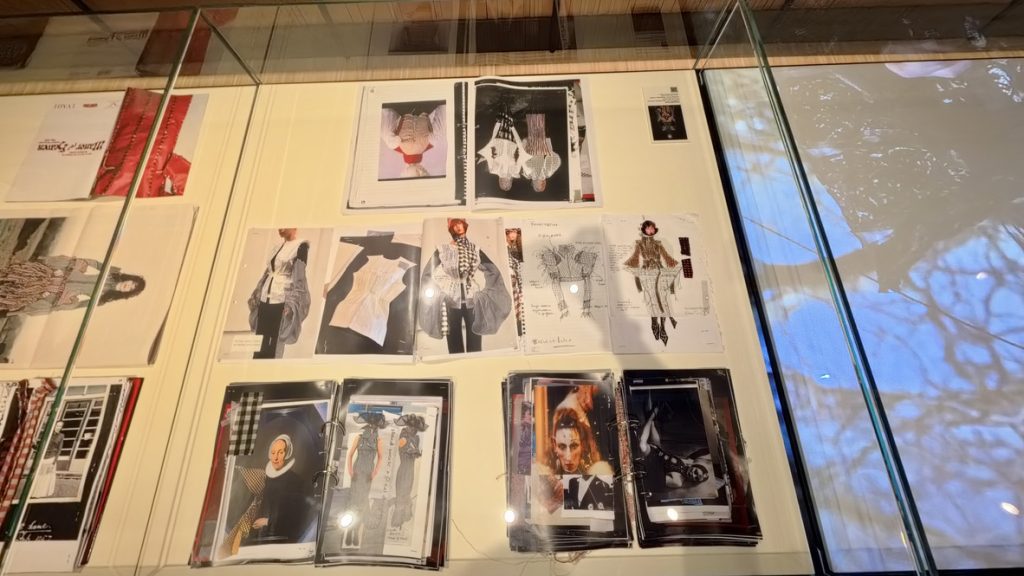
How do you decide on what to exhibit?
As all museums, it depends of course on the curatorial approach, on the theme we assign to a specific exhibition. The process isn’t any different from what other institutions would do: the idea dictates the choice of what will be featured in the exhibition, obviously. A theme that is very dear to us and that we are continuing to explore also with the current exhibition is the relationship between body and garment.
When you have a large enough collection of works, you start seeing patterns, connections between pieces, and realize you can group them by topic, technique, symbolism, era, and so on. Whenever a curator comes up with an idea for an exhibition at ITS Academy, coming up with options – after 25 years searching and collecting the works of young talents – is a natural process for us. With a unique collection like ours you want to know it inside out, with every possible perspective you can think of.
Who Wore This?

Curious question, why based in Trieste instead of Milan or Florence or Naples for a fashion museum?
The choice of Trieste was never accidental. In many ways, this apparent contradiction is exactly what makes ITS Contest and ITS Academy what they are. We were invited many times to move to a traditional fashion capital, but we chose to remain here — not only because Trieste is our home, but because being outside the center of the system gives us a different perspective.
Distance can be a strength. Being away from the noise, speed, and politics of the major fashion capitals allows us to create a space where creativity can be observed with more attention and openness. ITS Contest was never about following trends; it was born from the need to discover voices that could re-shape the future of fashion.
ITS Academy is located on Via della Cassa di Rosparmio 10 Trieste.
Part 2 of the interview is coming soon.